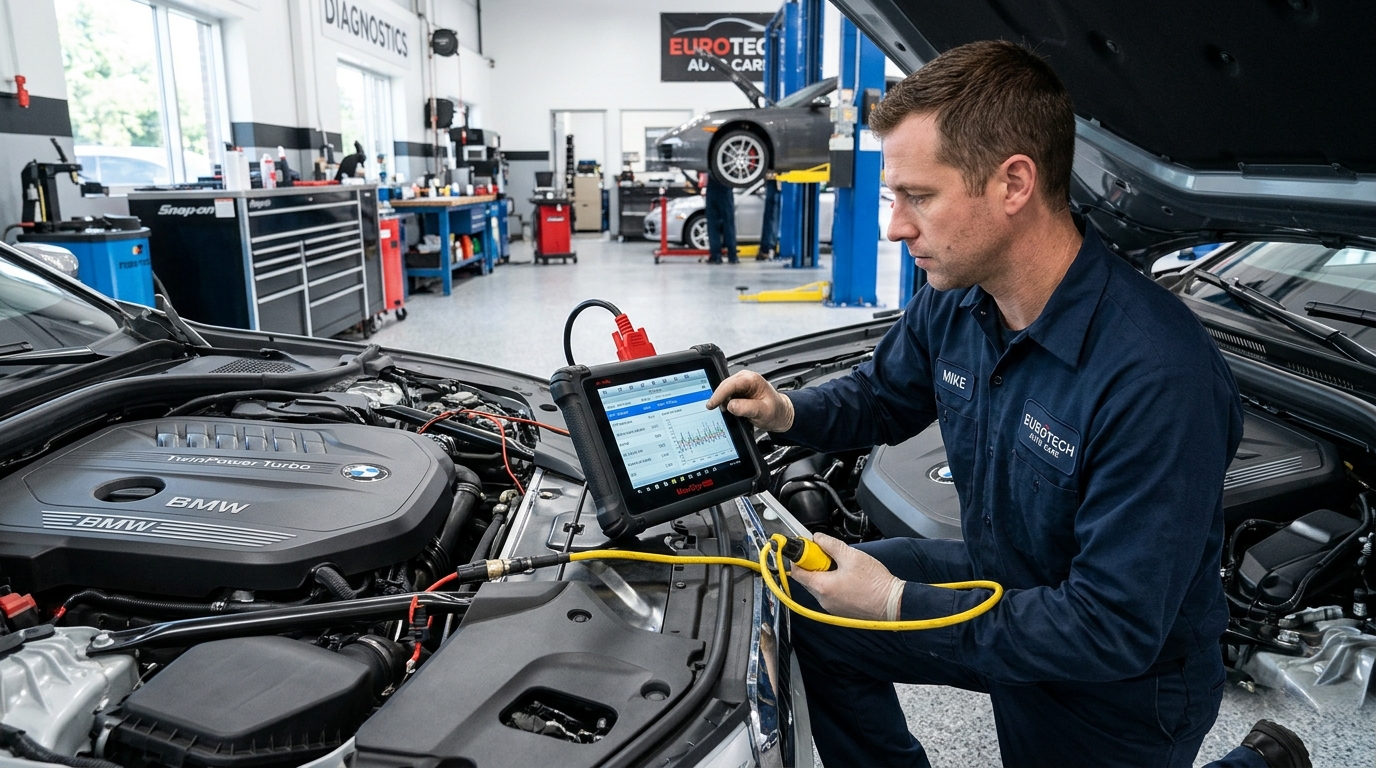
Sometimes a check engine light will come on for no apparent reason, even when a vehicle appears to be running fine. Other times the signs are harder to ignore. You may notice engine hesitation when accelerating, difficulty starting the vehicle or increased fuel consumption. There are several different problems that could be causing these symptoms, and guessing at the cause could lead to unnecessary repairs. If you’re a driver in Anchorage, professional engine diagnostics can help you discover what’s going on under the hood. Alaska Professional Auto utilizes engine analyzer equipment to test vehicle performance, retrieve information from the onboard computer and investigate possible faults. The idea is to get to the root of a problem before it leads to a more expensive or disruptive repair.
Modern cars and trucks use electronic systems to monitor engine operation. Sensors gather data on things such as air intake, engine temperature, exhaust emissions and fuel delivery. This data is used by the vehicle’s computer to control performance and detect certain problems. An engine analyzer is connected to the vehicle’s onboard diagnostic system to pull trouble codes and associated operating data. Depending on the vehicle and the equipment used, technicians may also be able to look at live sensor readings and other performance information.
A diagnostic code, however, does not tell you which part, specifically, needs to be replaced. For example, a code related to an oxygen sensor could mean a problem with the sensor itself, damage to wiring, an exhaust leak or some other thing affecting the reading. There can be many different reasons for the same warning, so professional interpretation is necessary. At Alaska Professional Auto, we use engine analysis as part of a systematic approach to investigate faults and help determine what repairs may be needed.
Buying parts on a symptom basis can get expensive. Rough running could be caused by an ignition problem, an air intake problem, a fuel delivery problem or a sensor which is not working properly. But without enough testing it can be hard to know which of these is the case. Professional engine diagnostics narrow down the cause through information from the vehicle computer, visual inspections and other tests where necessary. Rather than focusing on the warning light or noticeable symptom alone, technicians look for the underlying fault. This helps to avoid having to replace parts that are still in good working order.
One of the most common reasons drivers come in for diagnostic services is the check engine light. It can arise from a relatively minor issue, but it can also be a sign of a problem that needs immediate attention.
Constant Check Engine Light – This usually means the vehicle needs a check soon. A flashing light, especially with rough running or shaking, can be a sign of a serious engine misfire that may damage the catalytic converter. If you do, slow down and pull over somewhere safe. If you’re feeling like you want to drive as normal, seek professional help instead.
These signs don’t always mean the engine itself is damaged, but they can indicate problems with the systems that control its operation.
Modern engines rely on a lot of electronic devices working together. The engine control module receives information from sensors. Wiring and electrical connections transmit signals from one component to another. A bad sensor can give wrong information and interfere with fuel delivery, ignition timing or emissions control. Similar symptoms can be caused by damaged wiring, loose connections and electrical faults.
Sometimes the problem is not with the component that a diagnostic code identifies, but with a component that is receiving wrong information. This is why you need testing by professionals. Reading the code is just the beginning. Before a proper repair can be identified a technician may have to check electrical circuits, compare sensor readings, inspect connections and perform other tests. For drivers in Anchorage, AK, the team at Alaska Professional Auto provides the comprehensive diagnostic evaluation needed to keep your vehicle reliable on the road.